
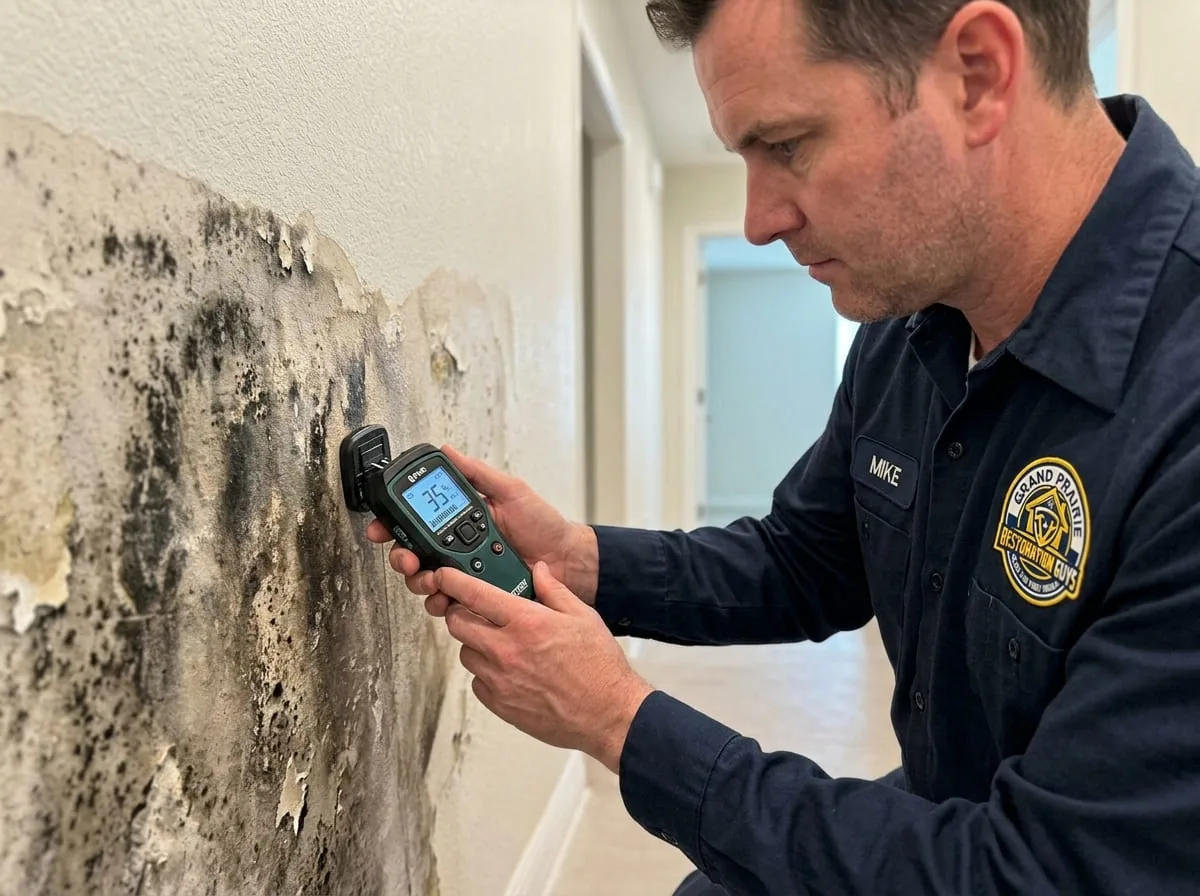
'Black mold' is one of the most-searched mold terms, for understandable reasons — dark, splotchy growth on a wall or ceiling is unsettling to find. In practice, mold that looks black or dark green can be any of several species, and color alone doesn't tell you which one, or how serious it is. What matters more is confirming what's actually there and fixing the moisture source that let it grow.
What 'Black Mold' Actually Means
Mold comes in a wide range of colors — black, dark green, gray, white, and orange, sometimes on the same surface. What you see is shaped by the material it's growing on, lighting, and moisture level, not just the species. Identifying the actual type present requires sampling and lab analysis, not a visual guess — which is why testing is a separate, useful step from remediation.
Why the Process Doesn't Change Based on Color
Regardless of color, remediation follows the same core steps: find and correct the moisture source, contain the affected area, remove what can't be cleaned, treat what can be, and confirm the space is dry before closing it back up. Treating dark-colored mold with more urgency than a lighter-colored problem under the same conditions isn't supported by anything but appearance.
Signs You May Have a Mold Problem Worth Checking
- Dark or black staining or growth on drywall, grout, wood trim, or ceiling tiles
- A musty odor in a room with no other obvious cause
- Recurring dampness in the same spot after cleaning
- Discoloration that keeps returning after being wiped away
A Note on Health Concerns
General guidance from health authorities: indoor mold of any kind shouldn't be left to grow. Some people are more sensitive to exposure than others and may notice irritation, while many notice no symptoms at all. The reliable approach is having the area properly assessed and remediated.
What the Remediation Process Involves
Once dark or suspected mold growth is identified, the process typically includes containing the work area, removing materials that can't be cleaned, treating salvageable surfaces, correcting the moisture source, and confirming the area has dried to normal. Testing, where used, confirms what species is present and whether the work resolved the problem.
Before Help Arrives
- Avoid scrubbing, spraying bleach on, or otherwise disturbing dark mold growth — this can release spores into the air and spread the problem to unaffected areas
- Keep the area closed off from foot traffic and don't dry it with fans, which spreads spores the same way
- If there's an active moisture source you can safely shut off, that's worth doing before professionals arrive
Frequently Asked Questions
Is black mold more dangerous than other types of mold?
Color alone doesn't determine how concerning a mold problem is. What matters is the extent of the growth, how long it's been present, and the moisture conditions feeding it — all things a proper assessment looks at rather than relying on visual color alone.
Do I need testing to confirm it's 'black mold'?
Testing and lab analysis is the only reliable way to identify the specific species present. A visual assessment can tell you that mold growth exists and roughly how extensive it is, but species identification requires sampling.
Can I remove a small patch of dark mold myself?
Disturbing mold growth without containment can spread spores to unaffected areas, and it doesn't address the moisture source that caused it. Even a small, contained patch is worth having assessed by someone equipped to handle it properly.
Will remediation cost more if the mold is black instead of another color?
Pricing is based on the size of the affected area, the materials involved, and the scope of work required — not the mold's color.
Why does mold sometimes look black in one spot and green or gray nearby?
Color can vary across the same growth area depending on moisture level, the surface material, and lighting, even when it's a single species. This is another reason color alone isn't a reliable way to assess a mold problem.