
Not every pipe failure looks the same. A burst supply line is loud and obvious; a slab leak is quiet and can run for weeks. Both are more common in Grand Prairie than in many markets, for reasons tied to the ground the city is built on and the era much of it was plumbed.
Signs of a Burst or Leaking Pipe
- Sudden, obvious water flow from a fixture or wall
- A warm spot on the floor with no explanation (a common slab leak sign)
- An unexplained jump in the water bill
- Damp carpet or flooring with no visible source nearby
- Running water sounds when every fixture in the house is off
Why Grand Prairie Sees So Many Slab Leaks
Slab Foundations and Clay Soil
Most homes across Grand Prairie and the wider DFW area sit on concrete slab foundations, not basements, due to the region's high water table and expansive clay soil. That soil swells and shrinks with seasonal moisture, stressing the copper and CPVC lines running through a home's slab.
A Genuinely Regional Problem
Foundation repair is a well-established local industry for this reason — slab leaks here are a regional cause, not a generic “pipes get old” story.
Polybutylene (Poly-B) Plumbing: A Known Risk in Older Homes
Homes built roughly 1978 to 1995 across Texas commonly used polybutylene supply piping, later the subject of a well-documented class-action settlement after widespread failures. In a home from that window, poly-B is a recognized risk factor — not a reason to panic, but reason to take an active leak seriously.
Risks of Waiting
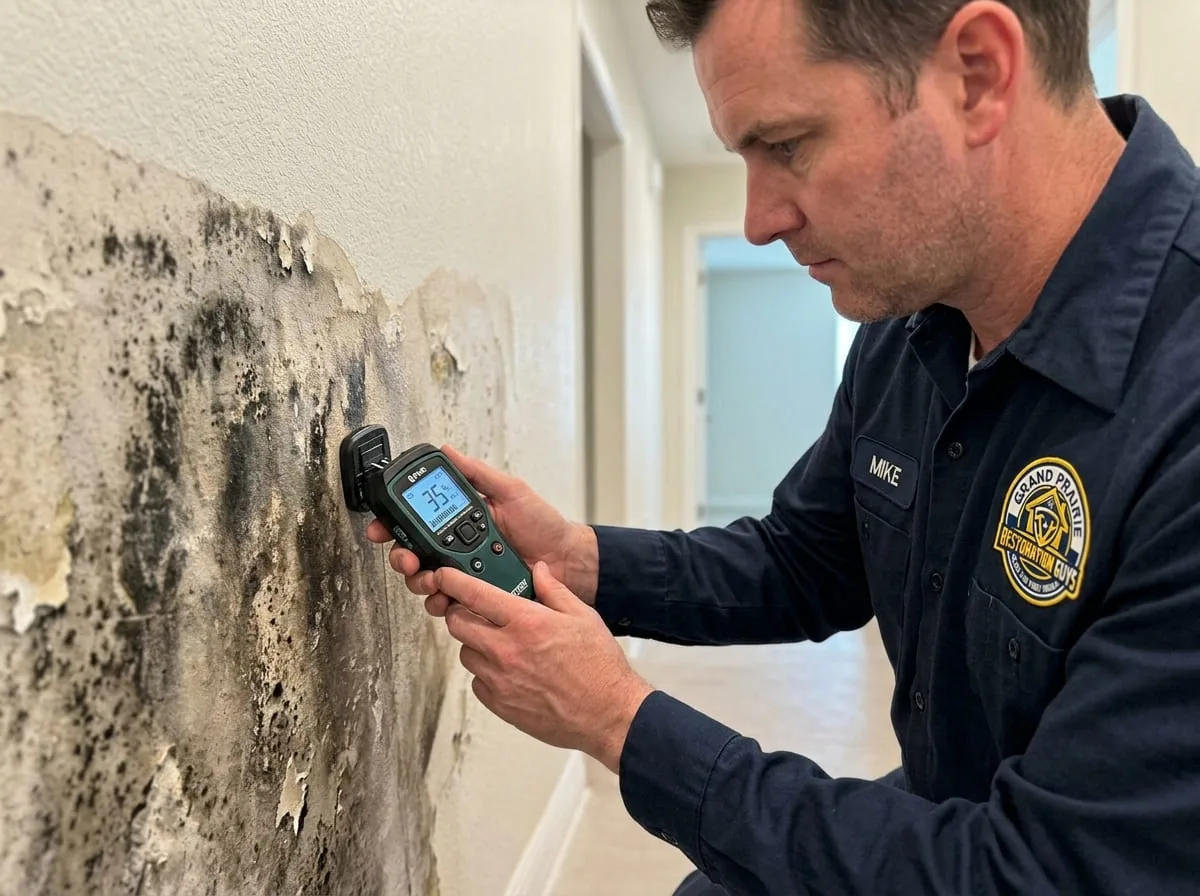
A leak running even a few days can saturate subflooring, wick into drywall and baseboards, and start supporting mold, especially in Grand Prairie's humid months. A slab leak can also erode soil beneath the foundation the longer it's unaddressed, turning a plumbing problem into a foundation one.
The Burst Pipe Cleanup Process
The water source has to be located and stopped first, which for a slab leak usually means bringing in a licensed plumber alongside the restoration work. Extraction follows, then structural drying with moisture monitoring, and plumbing repair or slab access coordinated as part of the same job.
What's Salvageable
This depends on how long the leak ran before discovery. Drywall and insulation near the source are often replaced rather than dried, especially after a slow leak fully saturates them. Flooring salvageability depends on material and duration, covered on the hardwood and flooring page.
Residential and Commercial Considerations
Residential slab leaks are usually isolated to one area of the home. Commercial buildings with larger slab footprints can have a leak travel further before it surfaces, sometimes requiring a wider search to pinpoint the source.
Before Crews Arrive
- Shut off the home's main water valve if a pipe has clearly burst
- Avoid stepping into any area with both standing water and nearby electrical outlets or appliances
- Don't attempt to cut into a slab yourself to find or fix a suspected leak
Frequently Asked Questions
How do I know if I have a slab leak?
Common signs are a warm spot on the floor, a rising water bill with no clear reason, damp flooring with no visible source, or the sound of running water when all fixtures are off.
Is poly-B pipe still around in Grand Prairie homes?
It can be, in homes built roughly between 1978 and 1995. It's a recognized risk factor for that era of construction, not a guarantee any specific home will have a failure.
Do you fix the pipe or just clean up the water?
Restoration handles extraction, drying, and repair of the affected structure. Plumbing repair itself is typically coordinated with a licensed plumber as part of the same job.
Can a slab leak cause mold?
Yes, especially since slab leaks often run undetected for weeks, giving moisture plenty of time to reach materials that support mold growth.
What should I do if I hear water running with no fixture on?
Shut off the main water valve if you can reach it safely, and call (817) 618-7675 to get a technician out to locate the source before more damage occurs.