
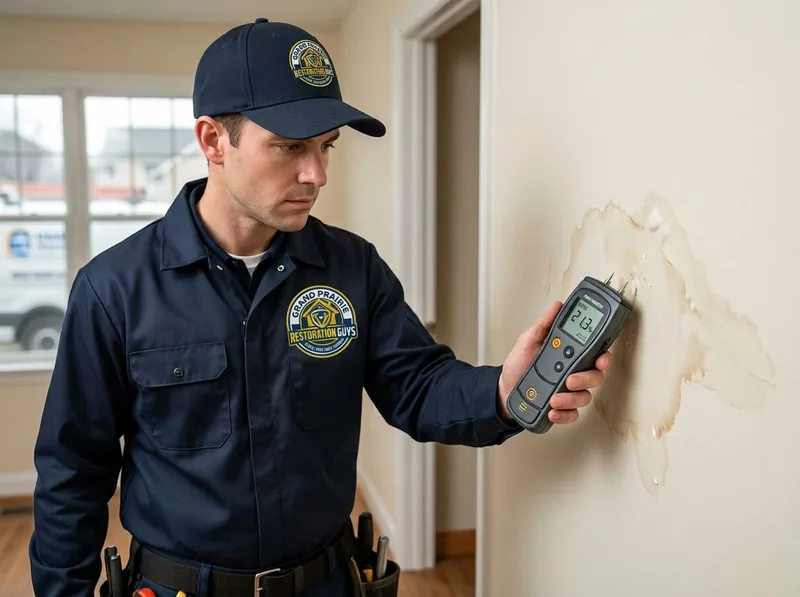
Appliance leaks get underestimated since they're usually smaller and slower than a burst pipe. A water heater failing gradually, or a fridge icemaker line dripping behind cabinetry, can go unnoticed for weeks while doing real, cumulative damage.
Common Appliance Sources
- Water heater tank corrosion or failure
- Washing machine supply hose bursts
- Dishwasher door seal or supply line failures
- Refrigerator icemaker line leaks
- HVAC condensate line clogs or drain pan overflow
Signs of an Appliance Leak
- Warped flooring or a swollen cabinet base near an appliance
- A musty smell under a sink or behind a refrigerator
- Water stains on the floor below a water heater
- Visible mold on the interior of a cabinet
Why These Leaks Go Unnoticed
The leak location is usually hidden behind or under the appliance, out of sight. A slow drip is easy to mistake for normal condensation, especially near a refrigerator or AC unit, delaying anyone taking it seriously.
Risks of Waiting
Subfloor rot is common after a long-running appliance leak, since water stays concentrated in one small area. Cabinet bases, especially particleboard, delaminate and swell. Mold can take hold inside an enclosed, low-airflow cabinet faster than in an open room, and a leaking upper-floor water heater risks damage to the ceiling below.
The Cleanup Process
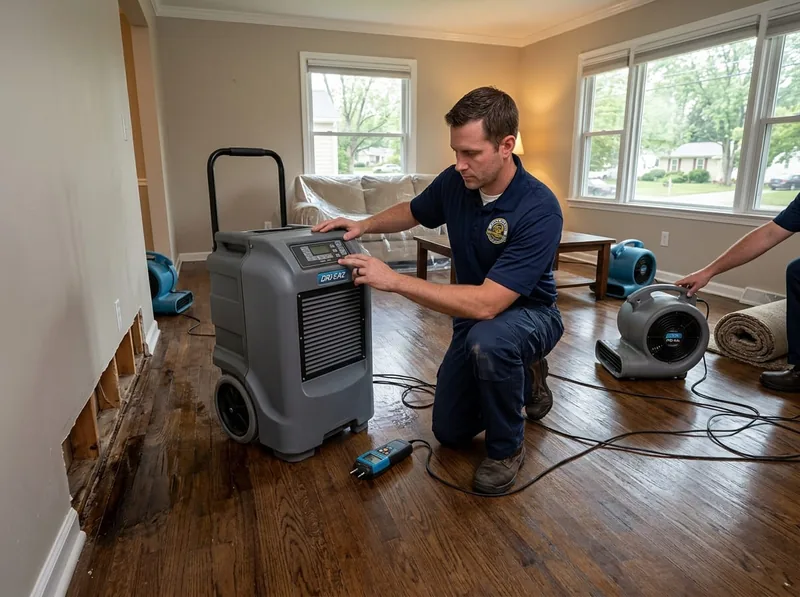
The source must be located and stopped first, sometimes requiring an appliance repair technician or plumber alongside restoration. Water is extracted from the cabinetry and subfloor; the cabinet base and flooring are dried in place where possible, or removed if saturation is too extensive. Framing underneath is dried and verified with moisture meters before closeout.
What's Salvageable
Solid wood cabinets often dry out fine. Particleboard bases, common in many kitchens, almost never survive saturation without swelling. Subfloor salvageability depends on material and exposure time; flooring depends on the type installed.
Residential and Commercial Notes
Commercial kitchens, breakrooms, and buildings with ice machines or water heaters serving multiple units see the same failure points at a larger scale, with more piping and appliances to check.
Before Crews Arrive
- Shut off the appliance's water supply valve if it's accessible
- Unplug the appliance if it's safe to do so and water isn't near the outlet
- Clear items out of lower cabinets to limit further contact with the water
Frequently Asked Questions
How long can a slow appliance leak go unnoticed?
Weeks or even months, since the source is usually hidden behind or under the appliance itself and the leak volume is small enough to go unnoticed day to day.
Do you replace the appliance too, or just clean up the water?
Restoration handles the water damage cleanup, drying, and any structural repair needed. Appliance repair or replacement is typically handled separately by an appliance technician or plumber.
Can my cabinets be saved?
It depends on the material. Solid wood often dries out fine; particleboard cabinet bases, which are common, usually swell and need replacement once saturated.
Is a water heater leak covered by insurance?
Sudden, accidental leaks are often covered under standard homeowners policies, though gradual leaks over time may be treated differently. Check your specific policy for details.
What's the most common appliance that causes hidden water damage?
Water heaters and washing machine supply hoses are among the most common sources, since both involve a constant water supply connection that can fail without warning.